Mayerthorpe Veterinary Services

4818 42 Ave (PO Box 509)

Mayerthorpe, Alberta ABT0E1N0 Canada

780-786-2000

Open mobile navigation
  • Home
  • Contact Us
  • About Us
    • Clinic Tour
      • Onsite Diagnostics
    • Meet the Staff
    • Service Overview
  • Services
    • Small Animal
      • Spays and Neuters
      • Vaccinations and Wellness Exams
      • Soft Tissue Surgery
      • Orthopedic Surgery
      • Dentistry
      • Laser Therapy
    • Bovine
    • Equine
    • Small Ruminant & Camelids
    • Cervid & Bison
    • Other Species
    • Emergency Services
  • Patient Resources
    • Small Animal
      • Breeding and Whelping
      • Puppy Care
      • Kitten Care
      • Geriatric Pets
      • Surgical Info
      • Tattoos and Microchips
      • Pet Euthanasia & Memorials
      • Spays and Neuters
      • Nutrition
    • Bovine
      • Bringing In Your Cattle
      • Farm Visits
      • Vaccinations
      • VCPR and Herd Health
      • Export and EU Certification
      • Resources
    • Equine
      • Bringing In Your Horse
      • Farm Visits
      • Wellness Care
      • Coggins Testing and Exports
      • Referral Information
      • Euthanasia
    • Small Ruminants and Camelids
      • Consultations
      • Deworming
      • Herd/Flock Health and VCPR
      • Vaccinations
      • Resources
    • Exotic and Pocket Pets
    • Veterinary Resources
    • Payment Options
  • Veterinary Newsletters
    • Pet Health
      • Chronic Conditions
      • Digestive and Oral Health
      • Diseases and Viruses
      • Pests and Parasites
      • Orthopedics
    • Today's Veterinarian
    • Choosing Your Pet
      • Finding Your Pet
      • Cats
      • Dogs
      • Exotics
        • Amphibians
        • Birds
        • Reptiles
          • Lizards
          • Turtles
      • Small Mammals
        • Ferrets
        • Rabbits
        • Domesticated Animals
          • Prairie Dogs
        • Pocket Pets
          • Chinchillas
          • Guinea Pigs
          • Hamsters
          • Hedgehogs
          • Rats
      • Livestock
        • Cows
        • Donkeys, Horses & Mules
        • Goats
        • Pigs
        • Poultry
        • Sheep
    • Living With Your Pet
      • Bringing Your Pet Home
      • Children and Pets
      • Providing Care
      • Travel
      • Saying Goodbye
    • Newsletter Library
      • Cats
      • Tips for Pet Owners
      • Behavior & Training
      • Fleas & Parasites
      • Keeping Pets Healthy
      • Recognizing Illness
      • Nutrition & Food
      • Pet Dangers
      • Seasonal Topics
      • Visiting the Vet
      • Equine
      • Newsletter Archive
        • Fun with Pets
        • Unbelievable Pets
    • Video Newsroom
      • Health Topics
      • Technology and Science
      • Other Interests
    • Newsletter Library
    • Client Survey
    • Pets4Kids
  • Home >
  • Articles >
  • Newsletter Library >
  • Recognizing Illness >
  • What to Do If Your Pet Eats Grass

What to Do If Your Pet Eats Grass

  • Created in Newsletter Library, Recognizing Illness
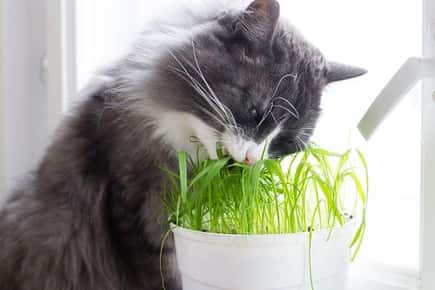
Image of a cat eating potted grass.

Does your pet regard your lawn as the perfect place to snack? Eating grass may not seem very appetizing to you, but your pet doesn't share your disdain. In fact, both dogs and cats enjoy eating a little grass from time to time. We'll explore why pets eat grass and explain what you should do if you notice that your furry friend loves the green stuff.

Why Does My Pet Eat Grass?

Pets eat grass for a variety of reasons. Some simply like the taste and find that chewing on a little grass enhances their usual diet of dog or cat food. Hunger is another possible reason. If your furry friend is hungry, grass may look awfully tempting. Although some pets never seem to be full, eating grass due to hunger may mean that your pet isn't receiving the nutrients needed for good health.

If you've recently decreased the amount of food your pet receives due to concerns about weight or have noticed that your pet always seems hungry, it's a good idea to schedule a visit with the veterinarian. Your pet's vet can provide advice about the best types of food products and tell you how much food your pet really requires. In some cases, constant hunger may be a sign of a disease, such as diabetes or a tumor.

Does Eating Grass Mean My Pet Has an Upset Stomach?

Grass eating may be a natural way to handle minor digestive problems in dogs and cats, according to one theory. If your pet has an upset stomach, eating grass may trigger vomiting and relieve your pet's nausea. It may also act as a natural laxative if your dog or pet is constipated. Although some people assume that eating grass always leads to vomiting, only a small percentage of pets actually vomit after ingesting grass.

Is Eating Grass Dangerous?

Eating grass usually won't harm your pet, unless your lawn has been treated with pesticides. Researchers discovered that dogs exposed to pesticides in lawn care products had a 70 percent higher risk of canine malignant lymphoma. The study was published in the January 2012 issue of Environmental Research.

What Should I Do If My Pet Enjoys Grazing on My Lawn?

There's no need to discourage the habit if your pet enjoys eating a little grass and doesn't experience any ill effects. If grass eating causes frequent vomiting, an examination by your pet's veterinarian can uncover the cause of the problem.

When grass is one of your pet's favorite snacks, it makes sense to avoid using lawn care products on your yard. If you do use the products, don't give your pet unsupervised access to your yard and your tasty grass. Because it's not known how long treated grass will retain the chemicals that harm pets, it's best to avoid ever letting your dog or cat eat treated grass. Instead, provide a small patch of untreated grass for your pet's snacking pleasure.

Unfortunately, you can't always tell if public parks or the laws you pass on your daily walks have been treated with pesticides. For your pet's health, assume that every blade of grass has been treated. If your pet tries to sample your neighbors' yards, gently pull him or her away from the lawn and offer a small treat instead.

If it's not convenient to establish a pesticide-free zone in your yard, consider growing grass inside your home. Planting grass in pots or containers is a simple way to ensure that your furry friend has a source of fresh, safe grass. Not sure what kind of grass to plant? Wheatgrass seeds, available online and in garden stores, offer a good source of protein, potassium, fiber, iron, zinc, copper and vitamins A, C, E, K, and B6.

Are you concerned about the effects of grass eating on your pet's health? Call us today to schedule a convenient appointment.

Sources:

Modern Dog: A Vet’s Take on Why Dogs Eat Grass

http://moderndogmagazine.com/articles/vet-s-take-why-dogs-eat-grass/297

PetMD: Why Do Cats Eat Grass?

http://www.petmd.com/cat/wellness/evr_ct_eating_grass

National Institutes of Health: Environmental Research: Household Chemical Exposures and the Risk of Canine Malignant Lymphoma, a Model for Human Non-Hodgkin’s Lymphoma, 1/12

https://www.ncbi.nlm.nih.gov/pmc/articles/PMC3267855/

  • Pet Health
    • Chronic Conditions
    • Digestive and Oral Health
    • Diseases and Viruses
    • Pests and Parasites
    • Orthopedics
  • Today's Veterinarian
  • Choosing Your Pet
    • Finding Your Pet
    • Cats
    • Dogs
    • Exotics
      • Amphibians
      • Birds
      • Reptiles
        • Lizards
        • Turtles
    • Small Mammals
      • Ferrets
      • Rabbits
      • Domesticated Animals
        • Prairie Dogs
      • Pocket Pets
        • Chinchillas
        • Guinea Pigs
        • Hamsters
        • Hedgehogs
        • Rats
    • Livestock
      • Cows
      • Donkeys, Horses & Mules
      • Goats
      • Pigs
      • Poultry
      • Sheep
  • Living With Your Pet
    • Bringing Your Pet Home
    • Children and Pets
    • Providing Care
    • Travel
    • Saying Goodbye
  • Newsletter Library
    • Cats
    • Tips for Pet Owners
    • Behavior & Training
    • Fleas & Parasites
    • Keeping Pets Healthy
    • Recognizing Illness
    • Nutrition & Food
    • Pet Dangers
    • Seasonal Topics
    • Visiting the Vet
    • Equine
    • Newsletter Archive
      • Fun with Pets
      • Unbelievable Pets
  • Video Newsroom
    • Health Topics
    • Technology and Science
    • Other Interests
  • Newsletter Library
  • Client Survey
  • Pets4Kids
No embed code settings found. Please configure it

Featured Links

Click to find out more

  • Facebook

    Find us on Facebook.

  • About Us

    Mayerthorpe Veterinary Services is proud to serve the Mayerthorpe Alberta area for everything pet related. Our veterinary clinic and animal hospital is run by licensed, experienced veterinarians.
  • Contact Us

    Please contact with any questions or to request an appointment.

Office Hours

Our Regular Schedule

Monday:

8:30 am-5:00 pm

Tuesday:

8:30 am-5:00 pm

Wednesday:

8:30 am-5:00 pm

Thursday:

8:30 am-5:00 pm

Friday:

8:30 am-5:00 pm

Saturday:

9:00 am-1:00 pm

Sunday:

Closed

Location

Find us on the map

Testimonials

Read What Our Clients Say

Featured Articles

Read about interesting topics

  • March Newsletter: How to Keep Your Cat Safe When Outdoors

    Wondering how your cat can safely spend time outdoors? ...

    Read More
  • March Newsletter: How to Choose Safe Blankets for Pets

    Do you know how to pick a safe blanket for your pet? ...

    Read More
  • February Newsletter: How to Reduce Dental Anxiety in Pets

    Does your pet hate toothbrushing? These tips could reduce dental anxiety. ...

    Read More
  • February Newsletter: How to Safely Change Your Cat’s Food

    Buying a new food for your cat? Find out how to switch foods safely. ...

    Read More
  • January Newsletter: Signs Your Pet Needs a Wellness Exam

    Does your pet need a wellness exam? ...

    Read More
  • January Newsletter: How Your Veterinarian Can Help If Your Pet Ingests Something Toxic

    Has your pet eaten something it shouldn't have? Find out how your vet can help. ...

    Read More
  • December Newsletter: Signs Your Pet Needs a Professional Cleaning

    Do you know when your pet needs a professional cleaning? ...

    Read More
  • December Newsletter: Simple Ways to Keep Your Home Flea-Free for Your Pet’s Well-being

    Never want to see another flea again? Try these tips for a flea-free home. ...

    Read More
  • November Newsletter: The Importance of Bloodwork for Your Pet’s Health

    Wondering if your pet really needs bloodwork? Find out the benefits of blood tests for your furry friend. ...

    Read More
  • November Newsletter: Turkey Day Tips for Pet Owners

    Don't forget about your pet when making Turkey Day preparations. ...

    Read More

Newsletter Sign Up

Error!

    • Copyright © 2026 MH Sub I, LLC dba iMatrix.
    • Admin Log In
    • Site Map