Mayerthorpe Veterinary Services

4818 42 Ave (PO Box 509)

Mayerthorpe, Alberta ABT0E1N0 Canada

780-786-2000

Open mobile navigation
  • Home
  • Contact Us
  • About Us
    • Clinic Tour
      • Onsite Diagnostics
    • Meet the Staff
    • Service Overview
  • Services
    • Small Animal
      • Spays and Neuters
      • Vaccinations and Wellness Exams
      • Soft Tissue Surgery
      • Orthopedic Surgery
      • Dentistry
      • Laser Therapy
    • Bovine
    • Equine
    • Small Ruminant & Camelids
    • Cervid & Bison
    • Other Species
    • Emergency Services
  • Patient Resources
    • Small Animal
      • Breeding and Whelping
      • Puppy Care
      • Kitten Care
      • Geriatric Pets
      • Surgical Info
      • Tattoos and Microchips
      • Pet Euthanasia & Memorials
      • Spays and Neuters
      • Nutrition
    • Bovine
      • Bringing In Your Cattle
      • Farm Visits
      • Vaccinations
      • VCPR and Herd Health
      • Export and EU Certification
      • Resources
    • Equine
      • Bringing In Your Horse
      • Farm Visits
      • Wellness Care
      • Coggins Testing and Exports
      • Referral Information
      • Euthanasia
    • Small Ruminants and Camelids
      • Consultations
      • Deworming
      • Herd/Flock Health and VCPR
      • Vaccinations
      • Resources
    • Exotic and Pocket Pets
    • Veterinary Resources
    • Payment Options
  • Veterinary Newsletters
    • Pet Health
      • Chronic Conditions
      • Digestive and Oral Health
      • Diseases and Viruses
      • Pests and Parasites
      • Orthopedics
    • Today's Veterinarian
    • Choosing Your Pet
      • Finding Your Pet
      • Cats
      • Dogs
      • Exotics
        • Amphibians
        • Birds
        • Reptiles
          • Lizards
          • Turtles
      • Small Mammals
        • Ferrets
        • Rabbits
        • Domesticated Animals
          • Prairie Dogs
        • Pocket Pets
          • Chinchillas
          • Guinea Pigs
          • Hamsters
          • Hedgehogs
          • Rats
      • Livestock
        • Cows
        • Donkeys, Horses & Mules
        • Goats
        • Pigs
        • Poultry
        • Sheep
    • Living With Your Pet
      • Bringing Your Pet Home
      • Children and Pets
      • Providing Care
      • Travel
      • Saying Goodbye
    • Newsletter Library
      • Cats
      • Tips for Pet Owners
      • Behavior & Training
      • Fleas & Parasites
      • Keeping Pets Healthy
      • Recognizing Illness
      • Nutrition & Food
      • Pet Dangers
      • Seasonal Topics
      • Visiting the Vet
      • Equine
      • Newsletter Archive
        • Fun with Pets
        • Unbelievable Pets
    • Video Newsroom
      • Health Topics
      • Technology and Science
      • Other Interests
    • Newsletter Library
    • Client Survey
    • Pets4Kids
  • Home >
  • Articles >
  • Video Newsroom >
  • Technology and Science >
  • Laparoscopic Surgery

Laparoscopic Surgery

  • Created in Video Newsroom, Technology and Science
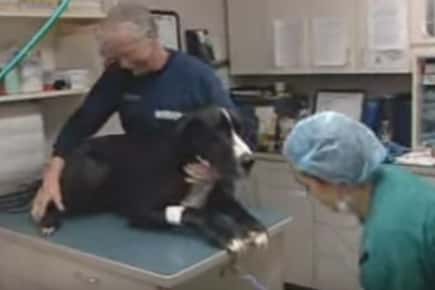
Image of a dog on an examination table being held down by a veterinarian and a vet technician.

Surgery is a scary thought for anyone, but advances in human medicine are helping to make patients more comfortable and shortening stays in the hospital. Even our pets are now benefiting from these improvements as cutting edge innovations are making their way into veterinary offices, providing a higher level of care for our pets.

Laparoscopic surgery, a minimally invasive type of procedure, was first performed on a dog in 1902! In the intervening years, human surgeons have perfected techniques to removal gall bladders, relieve the discomfort of endometriosis, and even help individuals with morbid obesity. Many of these techniques have been adapted by veterinary surgeons as well. A laparoscope consists of a telescoping rod and lens system connected to a video camera and light source. The surgeon inserts the laparoscope into the patient through a tiny (less than 1 inch long) incision. The abdomen is then filled with carbon dioxide to create space to work. Additional attachments, such as scissors, retractors, and devices for placing sutures are introduced and manipulated to complete the surgery.

The biggest benefit to laparoscopic surgery is the reduced need for a large incision in the abdomen. In the case of human gall bladder removal, traditional surgeries would create an incision about 8 inches long. With the latest laparoscope, 4 incisions, all less than ½ inch, will suffice to remove the gall bladder. Smaller incisions mean shorter recovery time, shorter hospital stays, and, above all, less pain. Veterinarians have seen these benefits and are anxious to export them to our pets. Laparoscopic surgery is becoming a viable alternative for pet owners wanting to provide a human-level of surgical care for their pets.

Surgeries that are considered "routine" by pet owners and veterinarians, such as spaying a female dog or cat, are now considered good candidates for the laparoscope. A surgical center in Colorado performed a small study in which 10 dogs were spayed via traditional surgical methods and 10 dogs were spayed with the laparoscope. The results of this study show that 90% of the traditionally spayed dogs needed additional pain relief medications after surgery whereas none of the dogs in the laparoscopic assisted group did. Blood concentrations of cortisol, a good indicator of stress levels, increased only in the traditional group.

These findings, as well as her own observations, have led Dr. Kuschel, a veterinarian at Deer Creek Animal Hospital in Colorado and her associates to eliminate traditional spays at their hospital. She stated that, "The price was significantly higher for the laparoscopic assisted procedure, but we actually did the same number of spays from one year to the next. We increased our level of care and now pet owners actively seek out our services because they know and understand the benefits of this cutting edge technology."

Veterinarians are not only using this revolutionary new tool for spays, but as an aid to help diagnose disease. Surgeons are able to biopsy internal organs with laparoscopic surgery and the procedure often requires no more than sedation and a local anesthetic. Previous protocols for biopsies demand general anesthetic and a prolonged recovery time. With some laparoscopic biopsies, the patient is often ready to go home in less than two hours! Although this technology is truly leading edge, don't expect it to show up in all veterinary offices immediately. Although this is all good news, laparoscopic surgery is not very common in most veterinary hospitals. If you are planning a surgery for your pet, ask your veterinarian about the potential for laparoscopic assisted surgery in your area.

High Tech Pet Surgery

  • Laparoscopy is a type of minimally invasive surgery. These surgeries provide a higher level of comfort when compared to many traditional procedures.
  • Laparoscopes use a telescoping rod and lenses that are attached to a camera and lights to view inside the body cavity.
  • The biggest benefit to laparoscopic surgery is that surgeons can utilize much smaller incisions, meaning that your pet will experience less pain and discomfort.
  • Veterinary surgeons report better visualization of the internal organs and reduced chances of hemorrhage when laparoscopes are used.
  • Laparoscopic surgery is used for routine spay surgeries, internal organ biopsies and for helping to prevent "bloat" in large breed dogs.
  • Veterinary surgeons report better visualization of the internal organs and reduced chances of hemorrhage when laparoscopes are used.
  • Small studies have shown that dogs spayed with a laparoscope experience less pain and need fewer pain medications after surgery.
  • Pet Health
    • Chronic Conditions
    • Digestive and Oral Health
    • Diseases and Viruses
    • Pests and Parasites
    • Orthopedics
  • Today's Veterinarian
  • Choosing Your Pet
    • Finding Your Pet
    • Cats
    • Dogs
    • Exotics
      • Amphibians
      • Birds
      • Reptiles
        • Lizards
        • Turtles
    • Small Mammals
      • Ferrets
      • Rabbits
      • Domesticated Animals
        • Prairie Dogs
      • Pocket Pets
        • Chinchillas
        • Guinea Pigs
        • Hamsters
        • Hedgehogs
        • Rats
    • Livestock
      • Cows
      • Donkeys, Horses & Mules
      • Goats
      • Pigs
      • Poultry
      • Sheep
  • Living With Your Pet
    • Bringing Your Pet Home
    • Children and Pets
    • Providing Care
    • Travel
    • Saying Goodbye
  • Newsletter Library
    • Cats
    • Tips for Pet Owners
    • Behavior & Training
    • Fleas & Parasites
    • Keeping Pets Healthy
    • Recognizing Illness
    • Nutrition & Food
    • Pet Dangers
    • Seasonal Topics
    • Visiting the Vet
    • Equine
    • Newsletter Archive
      • Fun with Pets
      • Unbelievable Pets
  • Video Newsroom
    • Health Topics
    • Technology and Science
    • Other Interests
  • Newsletter Library
  • Client Survey
  • Pets4Kids
No embed code settings found. Please configure it

Featured Links

Click to find out more

  • Facebook

    Find us on Facebook.

  • About Us

    Mayerthorpe Veterinary Services is proud to serve the Mayerthorpe Alberta area for everything pet related. Our veterinary clinic and animal hospital is run by licensed, experienced veterinarians.
  • Contact Us

    Please contact with any questions or to request an appointment.

Office Hours

Our Regular Schedule

Monday:

8:30 am-5:00 pm

Tuesday:

8:30 am-5:00 pm

Wednesday:

8:30 am-5:00 pm

Thursday:

8:30 am-5:00 pm

Friday:

8:30 am-5:00 pm

Saturday:

9:00 am-1:00 pm

Sunday:

Closed

Location

Find us on the map

Testimonials

Read What Our Clients Say

Featured Articles

Read about interesting topics

  • March Newsletter: How to Keep Your Cat Safe When Outdoors

    Wondering how your cat can safely spend time outdoors? ...

    Read More
  • March Newsletter: How to Choose Safe Blankets for Pets

    Do you know how to pick a safe blanket for your pet? ...

    Read More
  • February Newsletter: How to Reduce Dental Anxiety in Pets

    Does your pet hate toothbrushing? These tips could reduce dental anxiety. ...

    Read More
  • February Newsletter: How to Safely Change Your Cat’s Food

    Buying a new food for your cat? Find out how to switch foods safely. ...

    Read More
  • January Newsletter: Signs Your Pet Needs a Wellness Exam

    Does your pet need a wellness exam? ...

    Read More
  • January Newsletter: How Your Veterinarian Can Help If Your Pet Ingests Something Toxic

    Has your pet eaten something it shouldn't have? Find out how your vet can help. ...

    Read More
  • December Newsletter: Signs Your Pet Needs a Professional Cleaning

    Do you know when your pet needs a professional cleaning? ...

    Read More
  • December Newsletter: Simple Ways to Keep Your Home Flea-Free for Your Pet’s Well-being

    Never want to see another flea again? Try these tips for a flea-free home. ...

    Read More
  • November Newsletter: The Importance of Bloodwork for Your Pet’s Health

    Wondering if your pet really needs bloodwork? Find out the benefits of blood tests for your furry friend. ...

    Read More
  • November Newsletter: Turkey Day Tips for Pet Owners

    Don't forget about your pet when making Turkey Day preparations. ...

    Read More

Newsletter Sign Up

Error!

    • Copyright © 2026 MH Sub I, LLC dba iMatrix.
    • Admin Log In
    • Site Map